Toyota Tacoma Tires
All-terrain, all-season and mud-terrain tires matched to the truck you actually have
Start from the size your Tacoma left the factory on, then decide how much pavement comfort is worth trading for grip off it. Every fitment from 245/75R16 through 35X12.50R17, with overall diameter shown next to each one so an upsize stops being a guess.
What Size Tires Does a Toyota Tacoma Take
SR
245/70R1730.5″
SR5
245/70R1730.5″
TRD PreRunner
265/70R1731.6″
TRD Off-Road
265/70R1731.6″
TRD Sport
265/65R1831.6″
Limited
265/65R1831.6″
Trailhunter
265/70R1832.6″
TRD Pro
265/70R1832.6″
Toyota equips the upper off-road trims with approximately 33-inch all-terrain tires on 18-inch wheels. That is a factory configuration, engineered with the suspension, gearing and clearance around it, which is not the same thing as a 33-inch conversion on an older truck.
The placard settles it. The tire information placard inside the driver's door jamb carries the size and the cold pressure this specific truck was built around. On an unmodified Tacoma it beats every table, including this one.
Every Tacoma Tire Size
Overall diameter is calculated from each size, so a 265/70R17 reads as the 31.6-inch tire it is rather than as a number that means nothing next to your current 245/75R16.
16-inch wheels
9 sizes
245/75R16
30.5″ overall
Factory - 3rd-gen SR and SR5
LT245/75R16
30.5″ overall
LT casing, same fitment
265/70R16
30.6″ overall
Factory - 3rd-gen TRD Off-Road and Pro
LT265/70R16
30.6″ overall
LT casing, same fitment
265/75R16
31.6″ overall
The common first upsize
LT265/75R16
31.6″ overall
LT casing, same fitment
285/75R16
32.8″ overall
Wide 33-class, clearance work likely
LT285/75R16
32.8″ overall
LT casing, same fitment
31X10.50R16
31.0″ overall
Flotation, near-stock diameter
17-inch wheels
13 sizes
245/70R17
30.5″ overall
Factory - 4th-gen SR and SR5
245/75R17
31.5″ overall
One inch over the 4th-gen base size
255/75R17
32.1″ overall
Narrow 32, keeps steering light
265/65R17
30.6″ overall
Factory - 3rd-gen TRD Sport
265/70R17
31.6″ overall
Factory - 4th-gen PreRunner and TRD Off-Road
LT265/70R17
31.6″ overall
LT casing, same fitment
275/70R17
32.2″ overall
A true 32, minor trimming common
285/70R17
32.7″ overall
33-class, wheel offset matters
LT285/70R17
32.7″ overall
LT casing, same fitment
295/70R17
33.3″ overall
Wide 33, lift usually needed
LT295/70R17
33.3″ overall
LT casing, same fitment
33X12.50R17
33.0″ overall
Flotation 33, wide section
35X12.50R17
35.0″ overall
Full build: lift, offset, alignment
18-inch wheels
9 sizes
265/60R18
30.5″ overall
Factory - 3rd-gen Limited
265/65R18
31.6″ overall
Factory - 4th-gen Sport and Limited
265/70R18
32.6″ overall
Factory - 4th-gen Trailhunter and TRD Pro
275/65R18
32.1″ overall
Wider than factory, similar height
275/70R18
33.2″ overall
Roughly the factory TRD Pro diameter
LT275/70R18
33.2″ overall
LT casing, same fitment
285/65R18
32.6″ overall
Wide, close to Trailhunter height
33X12.50R18
33.0″ overall
Flotation 33, wide section
35X12.50R18
35.0″ overall
Full build: lift, offset, alignment
Diameters here are nominal, calculated from the size. A mounted tire measures slightly different depending on wheel width and inflation, and two tires sharing a size can differ by a few tenths of an inch. Availability in any given size moves through the year.
Highway, All-Terrain, Hybrid or Mud-Terrain
For the Tacoma that is transportation
Highway terrain
Tighter tread blocks usually mean less noise and lower rolling resistance, with wet behaviour and tread life getting more engineering attention than loose-surface grip. If the truck sees a gravel driveway and nothing rougher, this is the category that costs the least per mile.
Where most Tacoma owners should start
All terrain
Stronger shoulders and a more open tread, without turning normal highway driving into a compromise. Several carry severe-snow certification, which makes a good all-terrain the practical single-set answer for a truck that meets real winter. It is also where most owners should stop.
One step past an all-terrain
Hybrid and rugged terrain
Larger voids and more aggressive shoulders than a conventional A/T, with variable-pitch patterns and stone ejectors meant to hold highway noise and debris in check. Worth it on a modified truck that regularly moves between pavement and rock. The added weight and rolling resistance arrive whether or not the capability gets used.
Only when the terrain demands it
Mud terrain
Open tread clears thick mud and loose material in a way nothing else manages. The cost is road noise, rotating mass and pavement efficiency. Choosing the most aggressive tread available is easy. Choosing the least aggressive tread that still handles the hardest terrain the truck regularly encounters usually produces the better Tacoma.
Most Tacoma owners do not need the most aggressive tire available
They need the most aggressive tire that still works well for their normal driving. A truck spending 90 percent of its mileage commuting benefits from an all-terrain with controlled road noise, good wet braking and a substantial treadwear warranty. A Tacoma that spends weekends on loose rock can move toward a stronger LT construction or a hybrid pattern. Deep mud and technical off-road use justify a true mud terrain, along with the noise, weight and rolling resistance that arrive with it.
Featured Toyota Tacoma Tires
All terrain
6 tires
Falken
Wildpeak A/T4W
Falken engineered the A/T4W as an all-terrain and all-weather tire in one, and it carries the Three-Peak Mountain Snowflake rating for severe snow service. Full-depth sipes stay functional as the tread wears instead of disappearing in the first third of the tire’s life. Tacoma-compatible 265/70R17 and 265/75R16 versions exist in both standard metric and LT construction.
Check sizes and availabilityToyo
Open Country A/T III
A road-friendly all-terrain with genuine winter credentials, built for highway miles, all-season use and unpaved surfaces without sacrificing one for another. Toyo runs a 500-mile or 45-day trial programme under its published terms. For a Tacoma covering long highway distances that still wants an aggressive truck tire, this sits in a useful middle ground.
Check sizes and availabilityBFGoodrich
All-Terrain T/A KO3
The KO3 continues BFGoodrich’s all-terrain line with a revised tread compound, an optimised contact patch and full-depth locking 3D sipes. Serrated shoulders and mud-clearing features take over once the pavement ends. LT versions matter most on trucks carrying weight or spending long stretches aired down off road.
Check sizes and availabilityNitto
Terra Grappler G3
Nitto moved its long-running all-terrain toward stronger four-season capability with the G3. Full-depth siping and reinforced tread blocks handle wet roads and loose ground, and varied block sizes across the pattern break up the single tone that makes aggressive tires tiring over a long drive. The 70,000-mile coverage on hard-metric sizes is the longest here.
Check sizes and availabilityGeneral Tire
Grabber A/TX
An aggressive all-terrain that is also studdable in applicable configurations, which gives drivers in severe winter regions an option beyond relying on the tread alone. A Tacoma that deals with snow for four or five months a year can run the A/TX as a genuinely winter-capable single set. Dedicated winter tires remain the more specialised answer for repeated ice.
Check sizes and availabilityNitto
Recon Grappler A/T
The Recon sits between Nitto’s road-biased all-terrains and the Ridge Grappler: substantial shoulder blocks and tougher construction on a layout that stays manageable on pavement. It suits a Tacoma that needs a stronger casing and a visibly aggressive tread without moving to a mud-terrain design.
Check sizes and availabilityHybrid terrain
3 tires
Nitto
Ridge Grappler
Half all-terrain, half mud-terrain. Large shoulder lugs and substantial tread voids give it more off-road bite than a conventional A/T, while a variable-pitch pattern holds highway noise down and stone ejectors keep the grooves from filling. It is not an all-terrain with bigger lettering: weight, rolling resistance and ride all move with the tread.
Check sizes and availabilityMickey Thompson
Baja Boss A/T
An asymmetric hybrid tread with a silica-reinforced compound and aggressive Sidebiters running into the shoulder. PowerPly XD three-ply construction stiffens the carcass and sharpens steering response on applicable versions. For a modified Tacoma that regularly moves between pavement, rock and snow, it is the more aggressive alternative to a traditional A/T without going fully to M/T.
Check sizes and availabilityGoodyear
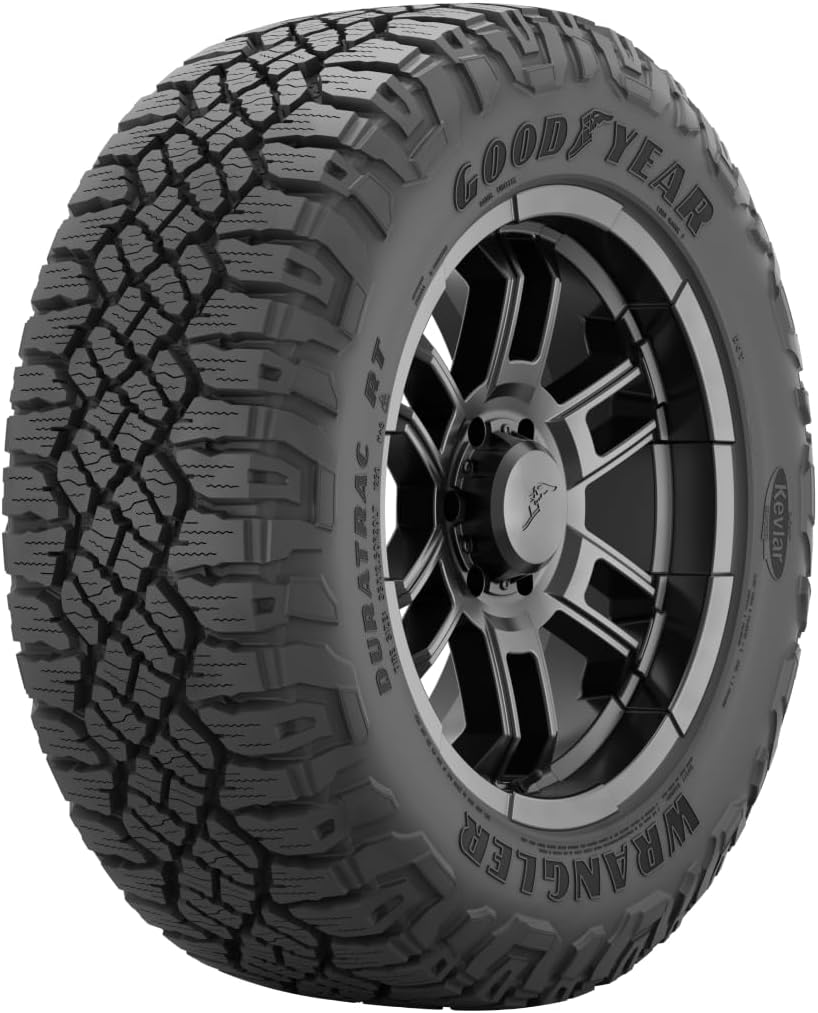
Wrangler DuraTrac RT
Goodyear supplies the factory all-terrain on the current off-road Tacoma trims, and the DuraTrac RT sits a step past that as a rugged-terrain design. Deeper shoulder scallops and a more open pattern than a highway-biased truck tire, aimed at trucks mixing gravel, worksite ground and pavement. Check the sidewall of the exact size for its snow rating.
Check sizes and availabilityMud terrain
3 tires
Nitto
Trail Grappler
A mud-terrain in the full sense. Large voids clear loose material and deep shoulder features find traction against rock and soft ground, with two sidewall designs so either side can face outward. This belongs on a Tacoma that actually needs the terrain capability; a commuter gains nothing from the weight and the noise.
Check sizes and availabilityToyo
Open Country M/T
Built for trucks that spend real time past the maintained road. Large tread voids evacuate loose material far more effectively than tightly packed all-terrain blocks, and the construction targets demanding off-road use rather than maximum highway refinement. Toyo lists Toyota trucks and SUVs among the applications for the family.
Check sizes and availabilityNitto
Mud Grappler
An extreme-terrain option rather than a general-purpose replacement. The high-void tread clears mud aggressively and massive side lugs carry the traction surface down onto the sidewall, over three-ply polyester construction and a high-strength steel belt package. For a truck that rarely leaves asphalt, almost anything else on this page is the better tire.
Check sizes and availabilityTreadwear coverage is quoted per construction, not per product name. The same tire routinely carries a shorter warranty in its LT and flotation sizes than in its metric ones, and that gap is what gets missed when two listings are compared by model alone.
What Toyota Tacoma Tires Cost
A quality Tacoma tire generally starts in the mid-$100 range per tire in common factory sizes and moves past $300 as diameter, LT construction and tread aggression increase. A realistic set of four runs from roughly $650 for mainstream fitments to $1,600 or more for large premium LT or extreme-terrain tires, before installation.
Mounting, balancing, valve hardware, TPMS service and disposal fees add to the installed total, and they scale with the tire too. A 35-inch LT casing is harder to handle on a machine than a 245/75R16, and the shop rate usually reflects that.
The cheapest tire is rarely the cheapest per mile. On a truck covering 15,000 or 20,000 highway miles a year, a 65,000-mile treadwear warranty is worth more than a lower sticker. On a trail truck, sidewall durability outranks mileage coverage entirely.
What moves the number
- Overall diameter. A 35 costs considerably more than a 31, in every line.
- LT versus standard load. The heavier casing is a price step on its own.
- Tread category. Mud and hybrid patterns sit above all-terrains, which sit above highway tires.
- Load range and load index within the same nominal size.
- Installation: mounting, balancing, TPMS service, valve hardware, disposal.
Running 33s and 35s on a Tacoma
Keeping the factory diameter is the lowest-risk choice: steering calibration, gearing, wheel-well clearance and speedometer behaviour all stay close to what Toyota built. Upsizing buys ground clearance, a larger contact patch when aired down and the proportions most Tacoma builds are designed around. None of it is free.
A taller tire raises the gearing
The engine has less mechanical leverage at the road, so acceleration softens and automatic shift behaviour changes with it. Crawl ratio moves too. Regearing the differentials becomes worth considering on builds that need to keep low-speed control or towing behaviour intact.
Braking has more mass to stop
Rotational inertia climbs with diameter and with weight, and a heavy LT casing adds far more of both than the size change alone suggests. A lifted truck on big tires also carries a higher centre of gravity than it left the factory with. No tire choice cancels that.
Fuel economy usually moves the wrong way
Larger frontal area, heavier construction and aggressive tread all add losses. A taller tire looks like a simple inch-based upgrade, but the drivetrain experiences it as a mechanical change. Blaming the tread for a drop after a two-inch jump usually misreads what happened.
Clearance gets checked at lock and at full compression
A tire that mounts to the wheel has not proven it fits the truck. Larger sizes reach the upper control arm, fender liner, body mounts and bumper, and the room that exists at rest disappears when the wheel turns or the axle articulates. Wheel width and offset decide the rest: pushing the tire out buys suspension clearance and spends it at the fender.
The speedometer reads low
Tire circumference decides how far the truck travels per wheel revolution, so a tire 3.5 percent larger in diameter covers 3.5 percent more ground each turn. At an indicated 60 mph the truck is doing about 62 unless the vehicle is recalibrated for the new size. Odometer readings drift the same way, which quietly stretches every service interval measured in miles.
33-inch tires
A “33” is a category rather than one exact size. Common examples fall between about 32.5 and 33.5 inches of calculated diameter, so two tires wearing the same nickname can differ by an inch of real height and by a noticeable amount of section width.
Toyota now fits approximately 33-inch tires from the factory on off-road fourth-generation trims, which proves the diameter works when the rest of the truck is engineered around it. That does not make a 33-inch conversion bolt-on for every Tacoma. Clearance depends on generation, wheel width, offset, caster, suspension position and the measured dimensions of the specific tire.
35-inch tires
A 35 is a substantial modification for most Tacomas. Sizes such as 35X12.50R17 are widely available in truck tire lines, but availability is not fitment. Suspension changes, wheel offset selection, alignment work and additional clearance modification are all commonly part of getting there.
The larger effective gearing change also makes differential gearing worth addressing on builds that need to preserve low-speed control or towing behaviour. Plan a 35-inch Tacoma as a system. Tire diameter is one component of it, not the project.
Load Range, Pressure, Towing and Rotation
Read 265/70R17 from left to right
265 is the nominal section width in millimetres. 70 is the aspect ratio, so the sidewall stands about 70 percent of that width. R means radial construction, and 17 is the wheel diameter in inches. Change any one of those numbers and more than the appearance changes.
Flotation sizes count in inches instead
A size written 35X12.50R17 gives approximate overall diameter first, then nominal width, then wheel diameter. Both formats appear across Tacoma fitments and describe the same kind of tire. The figures are nominal, so real mounted diameter and width shift with the approved wheel width.
Standard load, XL and LT are not interchangeable
A 265/70R17 115T and an LT265/70R17 fit the same wheel and measure close to the same. The LT uses construction intended for greater load and off-road demand, and it also adds rotating mass and rides firmer. Enough capacity for the truck’s real operating weight is the target. More capacity past that point is not free performance.
Load index carries the number, load range carries the construction
Load range broadly describes construction and pressure capability on light-truck tires. Load index specifies the maximum rated load at the applicable pressure. A replacement should meet the vehicle’s requirement rather than simply matching diameter, which matters most on Tacomas carrying a bed rack, drawer system, rooftop equipment, a camper or trailer tongue weight.
Use the placard pressure, not the sidewall maximum
The placard around the driver’s door jamb specifies the recommended cold pressure for the original fitment. The number moulded into the sidewall is the tire’s maximum, not the truck’s target, and an LT tire may permit far more pressure than an unloaded Tacoma needs. After a change in size, construction or load range, a load and inflation table for the actual size replaces guesswork.
Airing down has no universal number
Lower pressure enlarges the contact patch and lets the casing conform to terrain. Reduce it too far and heat builds, with a risk of debeading or sidewall damage. Vehicle weight, tire construction and wheel dimensions set the floor, and a figure that suits a light rig can be badly wrong on a loaded truck. Reinflate before sustained highway speed.
Towing starts with payload, not with tire stiffness
Trailer tongue weight becomes part of the payload the truck carries, so passengers, cargo and accessories come into the sum before deciding how much tire capacity is needed. Current Tacoma configurations reach 6,500 pounds of towing capacity, and the tire still has to match the exact truck and wheel package. A properly rated all-terrain tows without an extreme off-road casing.
Rotate on schedule, and fix alignment rather than symptoms
Toyota’s general maintenance guidance puts tire rotation in roughly the 5,000 to 8,000-mile range, with the exact interval depending on the vehicle and conditions. Aggressive tread makes poor alignment visible quickly: feathering, cupping or one-sided shoulder wear can consume an expensive set long before the tread is otherwise finished. Rotation spreads wear across four tires. It does not repair the cause.
A four-wheel-drive Tacoma also wants reasonably consistent rolling circumference across the set. Replacing all four is cleanest when the old tires are significantly worn; matching a printed size is not enough when one tire is new and the others sit near replacement depth, because tread wear changes circumference.
Toyota Tacoma Tire Owner Reviews
I have a tire machine and a balancer at my shop and installed these myself. They balanced easily and didn’t take any more weight to balance than you would expect. They are extremely smooth and quiet on the free...
Mckyla
Great tires. Ordered 5 of them and they arrived the next afternoon. Stored them in my home shop for about 3 months while I decided if I wanted to order new wheels for my truck. Tire shop Installer said they wer...
MynameisMiked
Great price, fast shipping. Tires mounted and balanced with no trouble and didnt require all sorts of extra lead to balance. Tires dont make excessive noise on the road and ride smooth. Size and fit is correct....
Anthony Proctor
Great tire for the price. Performed well in everything I’ve put it through and next to to road noise at all. 3000 miles in so far and no issues yet. Over all good looking and performing tire
Frank Gentry
Very quiet smoth riding tire. Will report once I get some miles on them.
David B.
Absolutely super quiet compared to the mud trax I was riding. Soft ride feels like a passenger tire almost. Very cushiony and soft feel.
DVC11_11
Built Around Tacoma Fitment
A Toyota Tacoma asks more from its tires than a typical road-going pickup. Daily highway miles can share the same week with gravel, snow, rutted access roads or rocky trails. Add towing, camping equipment or an oversized tire conversion and the demands change again.
The Tacoma name has been in use since 1995, and the current truck stretches the platform far past what the early one covered. A base SR on narrow factory tires and a current TRD Pro on factory 33-inch all-terrains are both Tacomas. Their ideal replacement tires are not interchangeable, which is exactly why buying a Tacoma tire by appearance makes so little sense.
So the range here is organised around one truck rather than a general catalogue. Original-size replacements for daily-driven trucks, severe-snow all-terrains, LT tires for loaded and towing builds, and aggressive off-road options for modified trucks, drawn from manufacturers with established light-truck lines.
Fitment comes first. Construction comes next. Tread pattern follows the terrain. That order is what keeps a Tacoma useful after the new tires are installed.
An independent retailer, not a Toyota program
Toyota Tacoma Tires is an independent tire retailer focused on tires and fitments for Tacoma trucks. It is not Toyota Motor Corporation, and it is neither a dealership nor a factory-owned tire program. The Toyota and Tacoma names identify vehicle compatibility. Tire manufacturer names and model names belong to their respective trademark owners.
Inspect the sidewalls after a rough trip
Tread depth is only one reason to retire a tire. Cuts, exposed cords, sidewall bulges and impact damage need attention immediately, and repeated air loss deserves diagnosis rather than constant reinflation.
A puncture in the central tread area may be repairable under industry guidelines. Structural sidewall damage is a different matter and is not treated like an ordinary tread puncture. Uneven wear should trigger an alignment and suspension inspection: fitting a new set without correcting the cause simply restarts the same failure pattern.
Frequently Asked Questions
The best Tacoma tire depends on how the truck is actually driven. A mostly paved daily driver usually benefits from a highway-terrain or road-friendly all-terrain tire. Tacomas that regularly see gravel, snow, forest roads or moderate trails are better matched with products such as the Falken Wildpeak A/T4W, BFGoodrich All-Terrain T/A KO3, Toyo Open Country A/T III or General Grabber A/TX. More aggressive hybrid tires such as the Nitto Ridge Grappler make sense when off-road traction carries more weight in the decision. Mud-terrain products belong on trucks that genuinely spend time in deep mud, loose terrain or technical trails.
There is no single Tacoma tire size. Factory fitment varies by generation, trim, wheel package and model year. Common third-generation sizes include 245/75R16, 265/70R16, 265/65R17 and 265/60R18. Fourth-generation trucks use configurations including 245/70R17, 265/70R17, 265/65R18 and larger factory off-road fitments around 33 inches on certain trims. The tire information placard inside the driver's door area is the correct starting point for an unmodified truck.
Many Tacomas can run tires around 33 inches, but fitment is not universal. Generation, suspension height, wheel width, wheel offset, alignment settings and actual tire dimensions determine clearance. Current Tacoma off-road configurations are available from Toyota with approximately 33-inch tires, but older or differently configured trucks may require suspension or clearance changes. A tire marketed as a "33" can also measure slightly above or below 33 inches. Published overall diameter should be checked rather than relying only on the size nickname.
A Tacoma can be built around 35-inch tires, but they should not be treated as a simple stock replacement. A 35-inch setup may require suspension changes, additional clearance work, carefully selected wheel offset and alignment adjustments. The larger diameter also changes effective gearing and increases rotating mass. Regearing can become worthwhile on trucks where low-speed response, acceleration or towing performance matters. For most Tacoma owners, 35s are part of a complete build rather than a tire-only modification.
Yes. A modern all-terrain is often the most practical Tacoma tire because it preserves normal road usability without giving up useful traction on dirt, gravel and light trails. Products such as the Falken Wildpeak A/T4W, Toyo Open Country A/T III and BFGoodrich KO3 use more open tread patterns than highway tires but remain designed for substantial pavement mileage. Daily drivers should pay particular attention to road noise, wet braking, tire weight and treadwear coverage instead of selecting solely by tread appearance.
All-terrain tires use a relatively balanced tread pattern that can handle pavement and unpaved surfaces. Mud-terrain tires use larger tread blocks with wider voids so mud and loose material can clear from the tread more easily. That extra off-road capability comes with compromises. Mud-terrain tires tend to be heavier, louder and less focused on pavement efficiency. A Tacoma that spends most of its life on asphalt rarely needs a true mud tire. Trucks regularly encountering deep mud, loose rock or difficult trails can justify the tradeoff.
Look for tires carrying the Three-Peak Mountain Snowflake symbol when winter performance matters. Tacoma-compatible examples include the Falken Wildpeak A/T4W, BFGoodrich KO3, Toyo Open Country A/T III and General Grabber A/TX. The 3PMSF marking indicates that the tire has met a defined snow-traction performance requirement. It does not turn an all-terrain tire into a dedicated ice tire. Drivers dealing with persistent ice, packed snow and severe winter temperatures can still gain substantial performance from a separate set of winter tires.
Not automatically. LT tires use construction intended for light-truck loads and demanding use. They can make sense for Tacomas carrying heavy equipment, campers or substantial payload, and for trucks that spend significant time on rough terrain. The tradeoff is usually additional weight and a firmer ride. A lightly loaded Tacoma used mainly for commuting may gain little from moving to a much heavier LT construction. Load capacity should match the truck's real requirements rather than simply choosing the strongest available sidewall.
The answer depends on how difficult the terrain is. For moderate trails, dirt and rocky access roads, an aggressive all-terrain such as the BFGoodrich KO3, Falken Wildpeak A/T4W or Mickey Thompson Baja Boss A/T can provide substantial capability without making the truck unpleasant on pavement. The Nitto Ridge Grappler moves farther toward serious off-road use. Trail Grappler, Toyo Open Country M/T and Nitto Mud Grappler sit deeper in the mud-terrain category for trucks that need large tread voids and more aggressive shoulder traction.
A Tacoma that spends nearly all of its mileage on pavement does not need an aggressive off-road tread. Highway-terrain tires generally prioritize lower noise, stable road manners and longer pavement-focused service life. A road-friendly all-terrain is the next step for drivers who still want additional capability for occasional dirt roads or winter travel. Selecting a lighter tire in the correct load specification can also preserve acceleration and fuel economy better than fitting an unnecessarily heavy LT mud tire.
Yes. Increasing tire diameter or weight can affect acceleration, braking, fuel consumption and gearing. A taller tire travels farther per wheel revolution. That effectively raises the gearing and can reduce the mechanical advantage available for acceleration. Heavy LT tires also require more energy to accelerate because of their added rotating mass. Aggressive tread can add rolling resistance as well. The exact change depends on the tire, wheel, engine, gearing and driving pattern, so two similar Tacoma builds can produce different results.
A roughly 5,000 to 8,000-mile rotation interval is appropriate for many Tacoma tire setups, but the vehicle and tire manufacturer's maintenance requirements should take priority. Regular rotation is particularly valuable with aggressive all-terrain and mud-terrain tires because uneven wear can become pronounced once it begins. A modified suspension or poor alignment can destroy a tire much faster than normal tread wear. Feathering, cupping or excessive wear on one shoulder should be diagnosed rather than simply rotated to another position.
Common Tacoma tires can start around the mid-$100 range per tire, with premium LT, hybrid and mud-terrain products often costing $250 to $400 or more each depending on size. A complete set can therefore range from roughly $650 for some standard-size options to well above $1,500 for larger premium off-road tires before installation. Mounting, balancing, TPMS service and disposal charges can add to the total. Larger sizes and higher load ranges generally cost more than standard-load factory replacements.
Toyota Tacoma Tires focuses on established truck and off-road tire manufacturers with products that fit common Tacoma applications. The selection includes lines from brands such as BFGoodrich, Falken, Toyo Tires, Nitto, General Tire, Mickey Thompson and Goodyear. Depending on size and intended use, the range covers highway-terrain, all-terrain, rugged-terrain and mud-terrain designs. Products are selected around Tacoma fitment and use rather than filling the catalog with unrelated passenger-car tires.
Toyota Tacoma Tires is an independent tire retailer focused on tires and fitments for Toyota Tacoma trucks. It is not Toyota Motor Corporation and should not be interpreted as a Toyota dealership or factory-owned tire program. Toyota and Tacoma names identify vehicle compatibility. Tire manufacturer names and model names belong to their respective trademark owners. The purpose of the brand is narrower than a general tire store: make it easier to compare appropriate Tacoma tires by generation, size, construction and intended terrain without forcing shoppers through thousands of irrelevant fitments.
If a Tacoma Needs a Different Kind of Tire
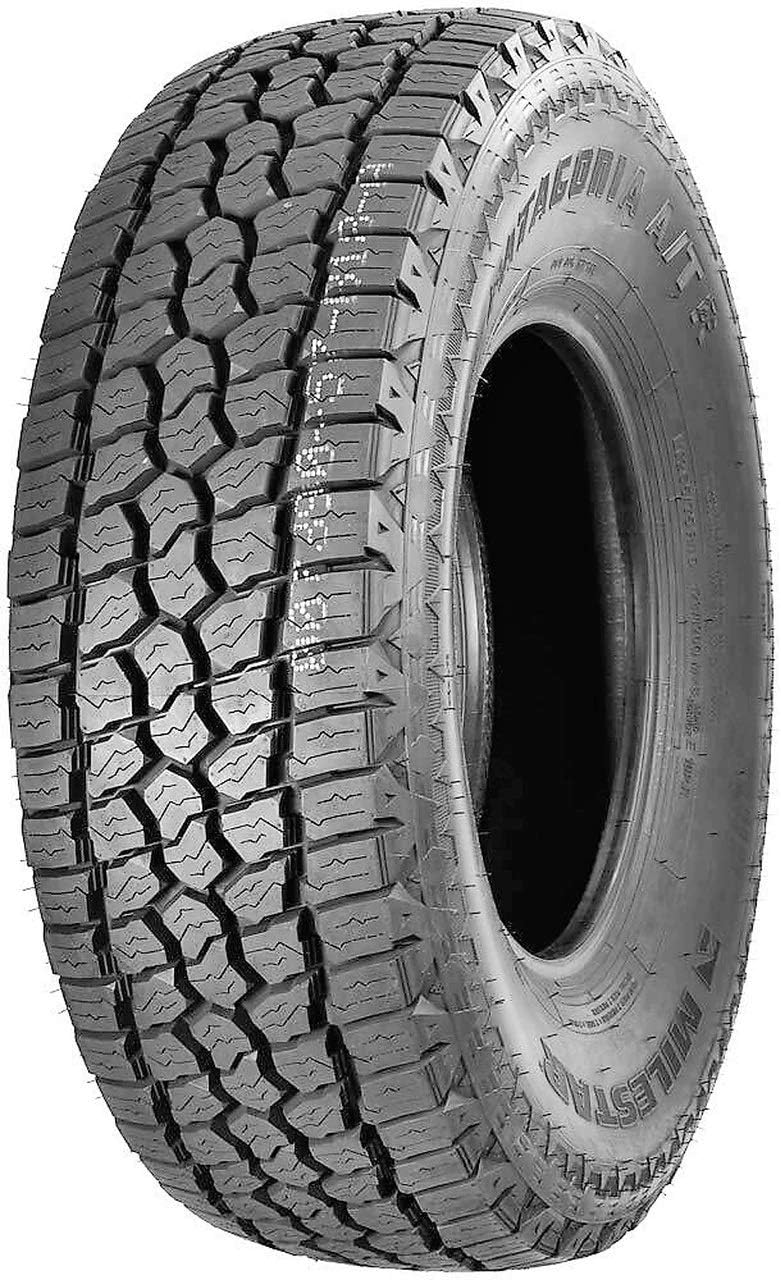
All terrain, lower price point
Patagonia
Milestar’s all-terrain line covers the same truck and SUV fitments a Tacoma uses, below the premium A/Ts on this page. Worth a look when four tires matter more than the last few percent of capability.
Visit website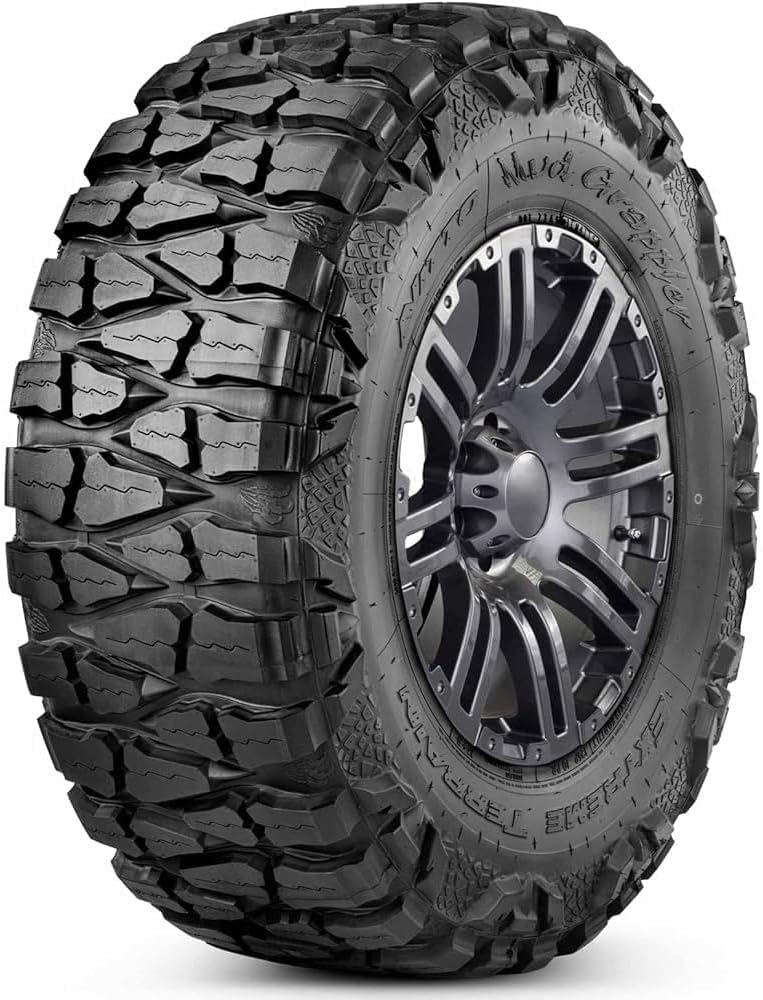
The whole Grappler range
Grapps
Nitto’s Grappler family runs from the road-biased Terra Grappler G3 through the Ridge Grappler hybrid to the Trail and Mud Grapplers. If the choice has narrowed to which Grappler rather than which brand, they sit side by side there.
Visit website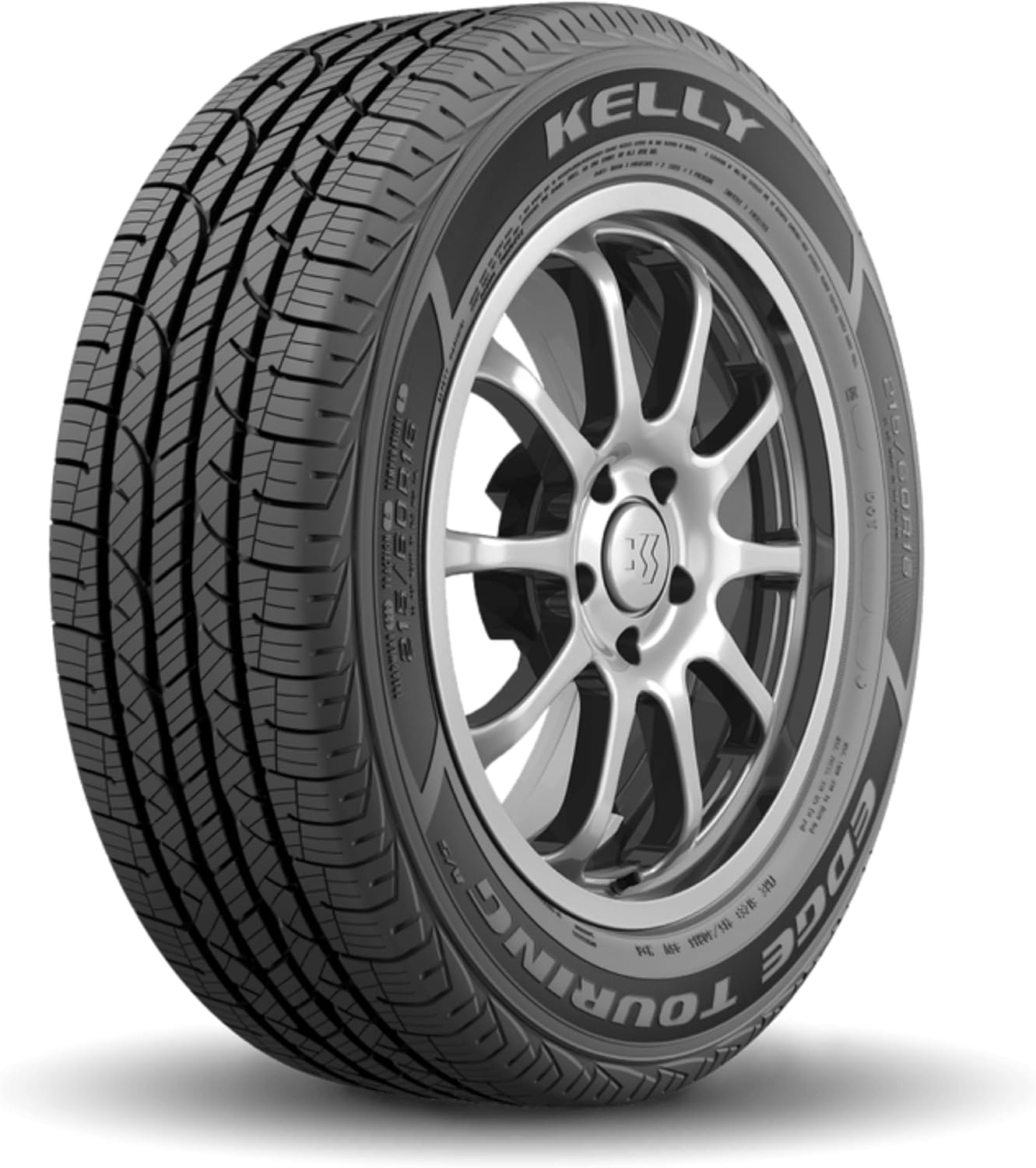
For the vehicle that stays on pavement
Kelly
Goodyear has run Kelly as its value badge since 1935, covering touring and light-truck fitments. That is the other half of most Tacoma driveways: one truck that goes out to the property and one car that never leaves asphalt.
Visit websiteMatch the Tire to the Truck
Read the full size string off the sidewall of the tire on the truck now, check it against the placard in the door jamb, and keep the load index the vehicle was built around. Clearance gets confirmed at full steering lock and full suspension travel, not at rest in a driveway.
Shop Toyota Tacoma Tires